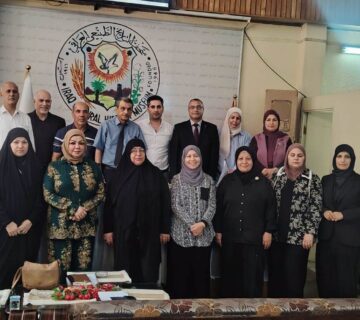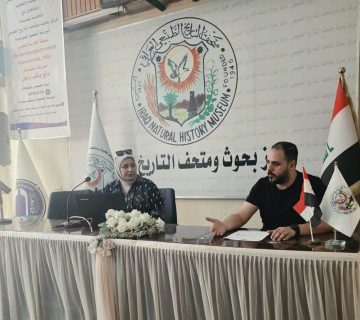
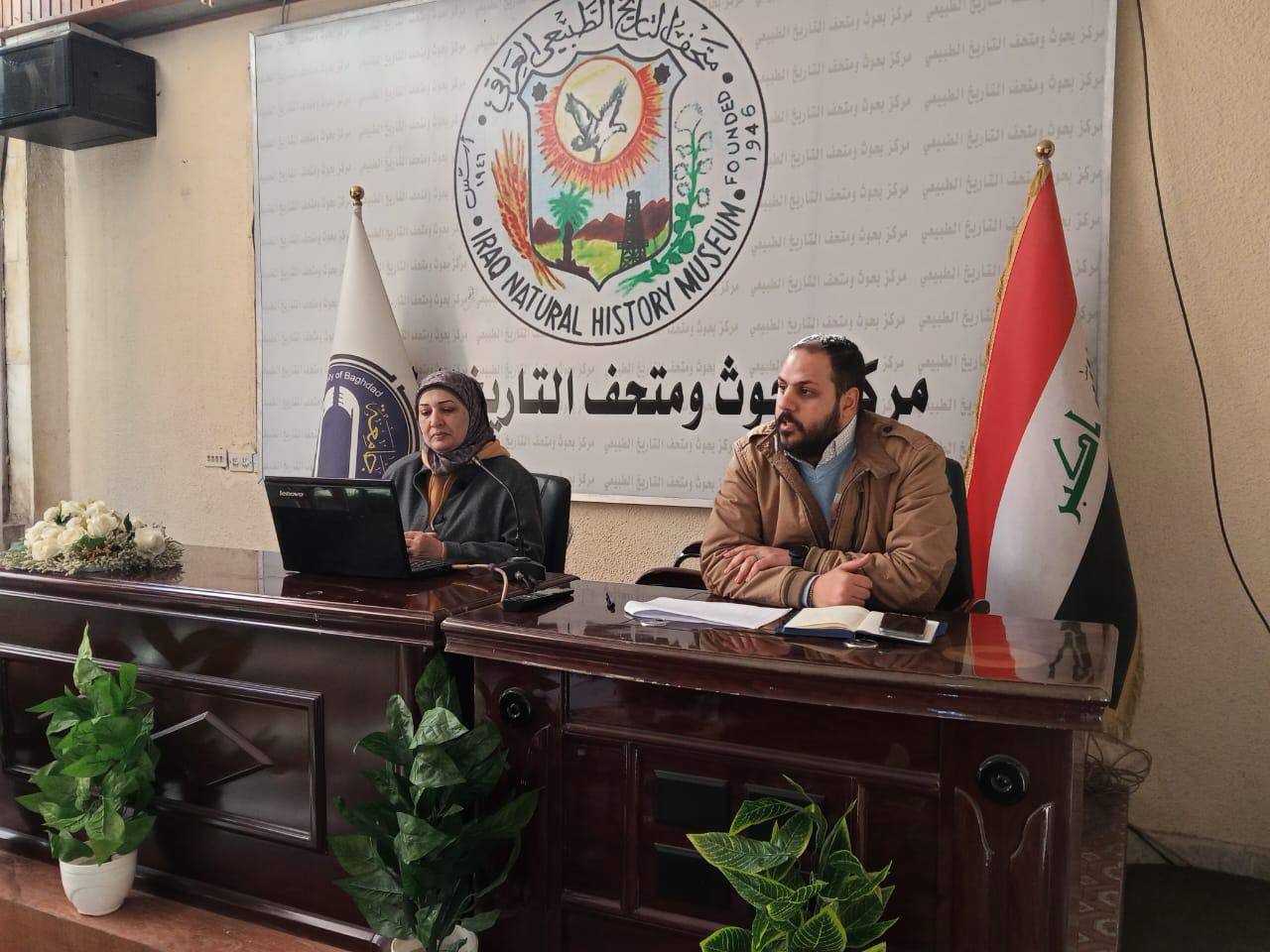
The Natural History Research and Museum Center at the University of Baghdad, with the support and guidance of Assistant Professor Dr. Hanaa Hani Al-Saffar, the center’s director, organized a workshop entitled “Explanation and Clarification of Reading Genetic Analysis Reports” on Monday, January 5, 2026. The workshop was facilitated by Assistant Lecturer Ali Kamel Wanas and presented by Professor Dr. Afkar Muslim Hadi, Head of the Vertebrate Department. During the workshop, she explained what DNA is, where it is found, how it is extracted, and the accuracy of data provided by specialized scientific offices in this field. She noted that the body of a living organism contains billions of diverse cells, including blood, nerve, and muscle cells, among others. Each cell contains the same number of chromosomes to produce all proteins, but the cell does not produce all of them because it does not need them all.
The extraction process involves several stages, which are:
• Ligation: Protease K, GST buffer solution, GSB buffer solution
• Cling: Absolute alcohol, GD column
• Washing: Washing solution
• Resuspension: TE buffer solution
Workshop Objectives: To understand the importance of DNA extraction for:
• Stabilization of lineage
• Genetic tree construction
• Indication of genetic disease
• Indication of genetic mutation
• Indication of genetic infertility in men
• Speciation diagnosis
• Detection of a specific gene that transmits a specific disease (e.g., diabetes)
• Detection of a specific gene for a specific desirable trait (e.g., body fat percentage)
At the conclusion of the workshop, the researcher recommended the necessity of knowing how to collect and verify samples before and after submission for extraction to prevent fraud against researchers and graduate students and to obtain genuine scientific results that conform to international standards.