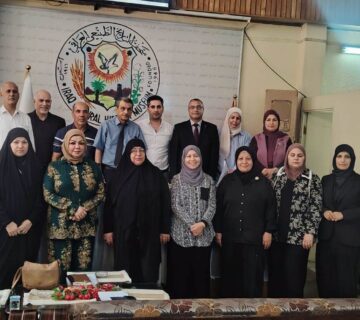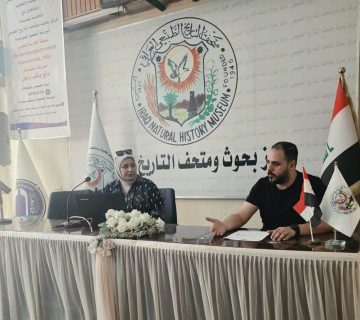
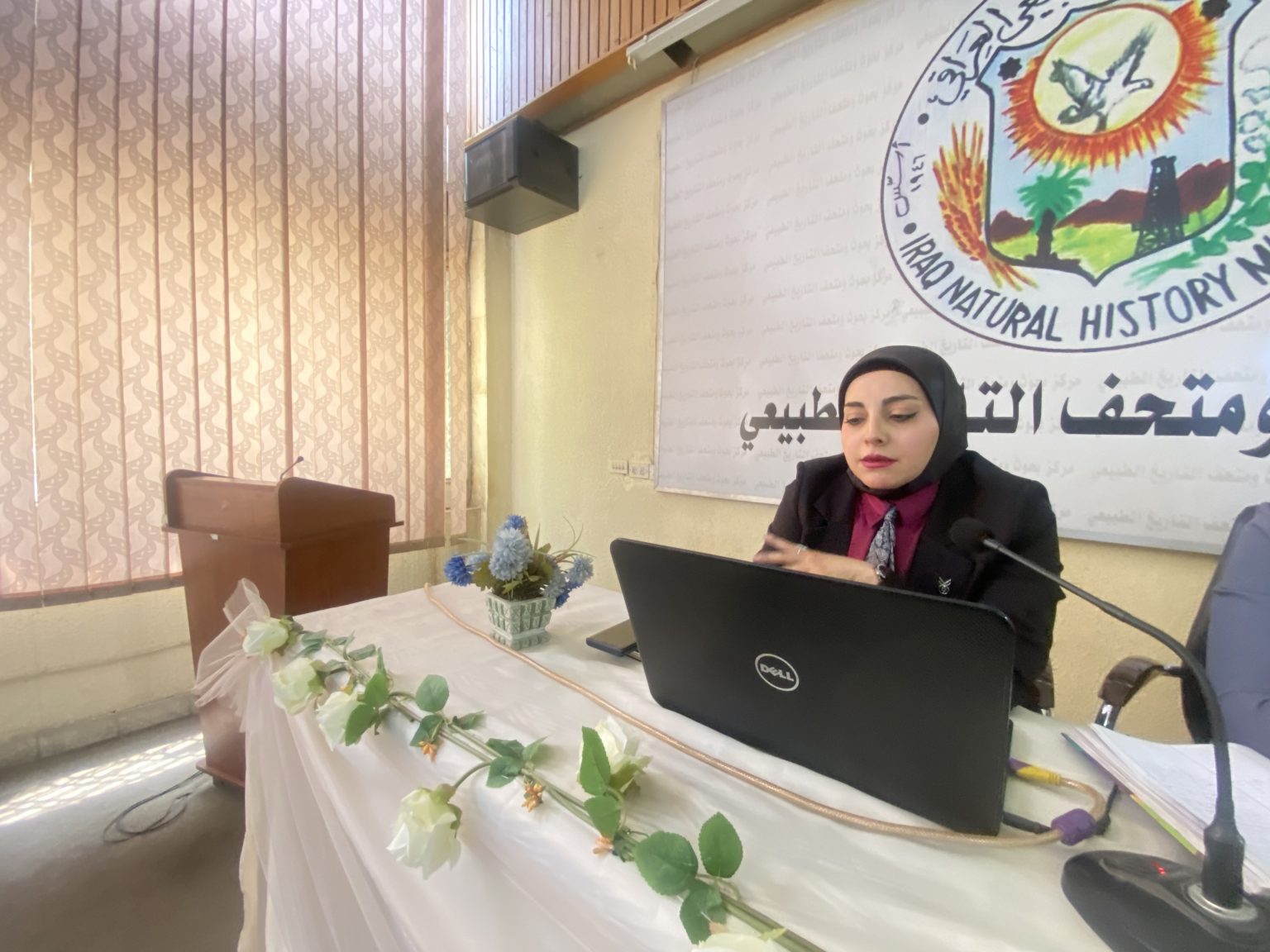
The Natural History Research Center and Museum, as part of its ongoing scientific activities and under the guidance of its Director, Assistant Professor Dr. Hana Hani Al-Saffar, recently hosted a discussion panel titled “The Natural History of Felids in the Iraqi Environment.” The event, organized by the Center’s Workshops and Seminars Committee, took place on Sunday, April 27, 2025.
The session was moderated by the Head of Agricultural Engineers, Enas Abdul Khalifa, and the presentation was delivered by a researcher from the Center. This panel aligns with the environmental and sustainability objectives of Good Education and Life on Land. The researcher provided a concise overview of Felidae, the family of mammals encompassing a diverse range of species, including lions, tigers, leopards, cheetahs, domestic and wild cats, and many others. This family belongs to the order Carnivora, one of nine families within this group. The earliest felines (proto-primates) emerged during the late Oligocene and early Miocene epochs.
They share characteristics such as rounded faces, flexible bodies, and long tails that aid in balance. Notably, they possess retractable claws. Felines exhibit distinctive body markings that vary based on their size, habitat, and climate, including soft white fur on the belly and under the chin in species like cats, cheetahs, tigers, and leopards. They heavily rely on their sense of smell and possess acute eyesight, enabling them to detect prey even in darkness. Felines are characterized by a relatively small number of teeth, typically no more than 32, with most having 30. Their sharp canine teeth are a defining feature, crucial for tearing the flesh of their prey.
The discussion session aimed to provide an introductory exploration of felines, their presence in the Babylonian era, extinct feline species in Iraq, felines in the contemporary Iraqi environment, and crucial recommendations for their conservation. During the session, the researcher underscored the importance of protecting wild cat populations within the Iraqi environment. This necessitates a collaborative approach involving government bodies, local communities, scientific research, and environmental studies. Specific efforts include preventing poaching, promoting environmental awareness, establishing nature reserves, mitigating habitat destruction, conducting thorough environmental studies, and fostering collaborations with environmental organizations such as the International Union for Conservation of Nature (IUCN) and the World Wildlife Fund (WWF).
The Center wishes its faculty members continued success in their endeavors to serve society, advance science, and enrich knowledge.