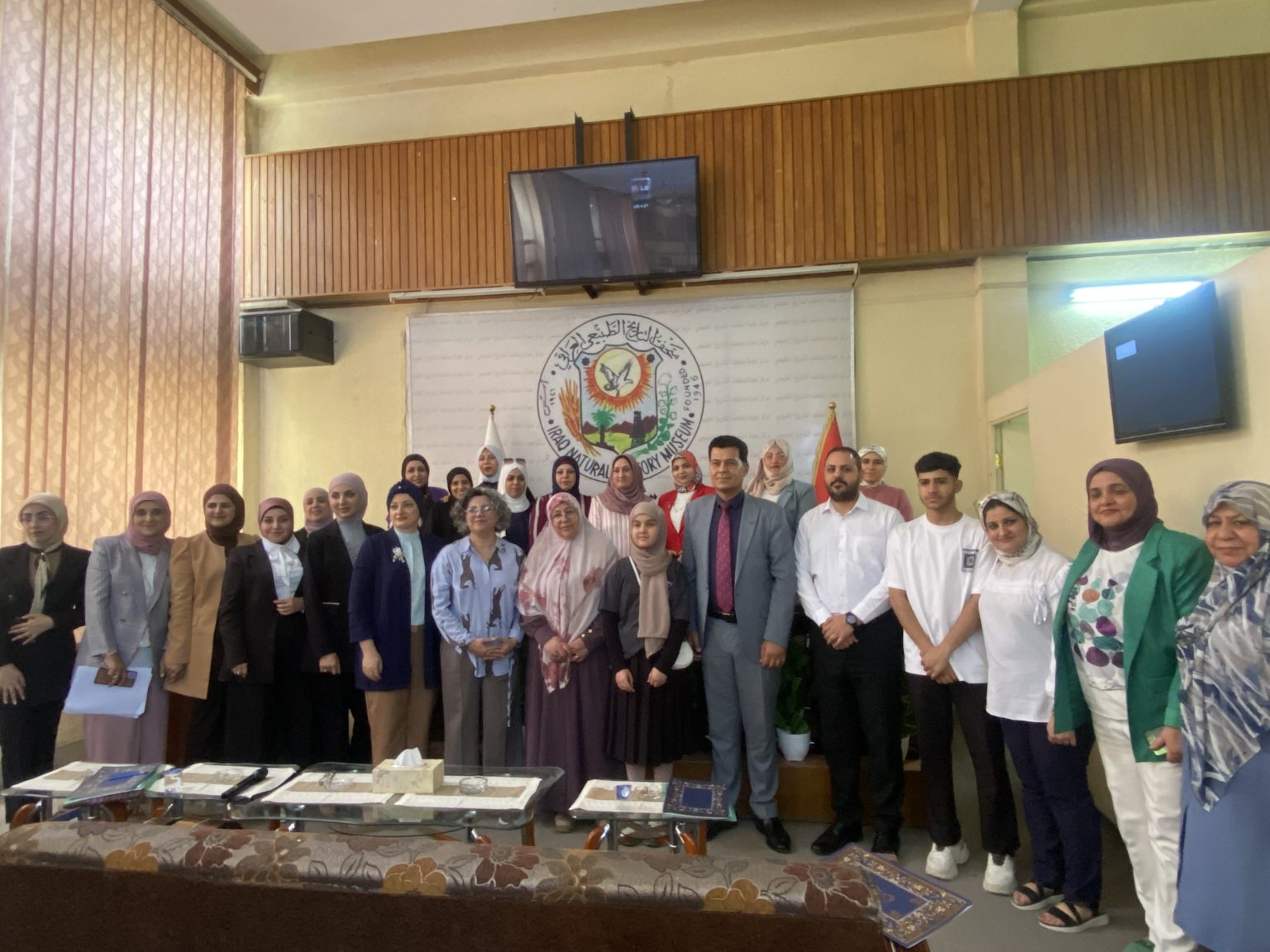
The Natural History Research and Museum Center recently hosted a scientific symposium and handicrafts exhibition titled “Legislative Regulation to Protect the Rights of Working Women in Iraq.” Held on Monday, June 2, 2025, the event was part of the center’s ongoing scientific activities, guided by its Director, Assistant Professor Dr. Hana Hani Al-Saffar. Professor Dr. Asmaa Jamil Rashid, Head of the Women’s Affairs Division at the University of Baghdad, was also in attendance.
This initiative was a collaborative effort involving several institutions, including the Laser Institute for Graduate Studies, the Center for Strategic and International Studies, the Center for Urban and Regional Planning, the National Center for Population and Demographic Studies, and the University Health Division. The symposium and exhibition aligned with environmental and sustainability goals, specifically focusing on Justice and Gender Equality and Sustainable Cities and Communities.
The primary goal of the symposium was to explore how legal legislation can safeguard the rights of working women in Iraq, ensuring their protection in the workplace.
The symposium explored the crucial role of legal legislation in translating constitutional principles into tangible rights. A significant focus was placed on Iraqi Labor Law No. 37 of 2015, which was highlighted as a landmark achievement in protecting the rights of working women. Over the past decade, Iraqi legislation has made remarkable strides in this area, particularly concerning non-discrimination and occupational health. The law has also expanded its scope to include women in the private sector and informal employment—a significant portion of the Iraqi labor market—addressing their administrative, social, and economic challenges.
The discussions were structured around three main themes:
The rights of working women in the Iraqi Constitution.
The fundamental principles of the Iraqi Labor Law of 2015.
Legal exceptions for working women in government institutions.
The symposium also acknowledged the essential role women play in nurturing and developing future generations, emphasizing its importance for social balance.
Recommendations and Recognition
Researchers at the symposium advocated for the activation and enactment of laws that specifically benefit Iraqi women, both in the public and private sectors, to uphold their rights and dignity within society.
The event concluded with the distribution of certificates of appreciation to participants who presented their research papers, showcased handicrafts, and contributed artworks, as well as to the organizers of this impactful activity. The organizers extended their best wishes for continued success to all educators, higher education and scientific research staff, and Iraqi universities.


