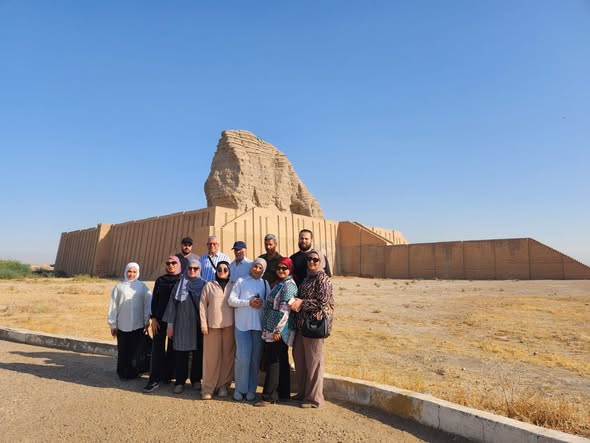
With the support and guidance of the center’s administration, Assistant Professor Dr. Hanaa Hani Al-Saffar, the Natural History Research and Museum Center at the University of Baghdad, organized a field trip to the Abu Ghraib region, including Aqarqouf, on Thursday, October 16, 2025. The delegation from the center included:
- Dr. Afkar Muslim Hadi
- Lecturer Ali Kamel Wanas
- Lecturer Mustafa Salim
- Lecturer Suhad Hamza
- Lecturer Maab Riyadh
- Lecturer Zainab Ghazi
- Lecturer Maryam Majid
- Lecturer Yasmin Sarmad Hassan
- Chief Agricultural Engineer Mohammed Salman
They were accompanied by Professor Dr. Aqeel Abbas Al-Zubaidi from Al-Karkh University of Science and retired lecturer Saman Afrasiab.
The trip included a tour of the Abu Ghraib district to conduct a field survey of the environment, which is characterized by its diverse terrain, residential, and agricultural areas. The field trip also revealed the region’s biodiversity. The Aqar Quf area, located within the Abu Ghraib district, was also visited and is considered one of the most important archaeological sites in Iraq.
The trip aimed to conduct research surveys in the Abu Ghraib area and observe biodiversity to complete the research plan. It also included a visit to the Aqar Quf ziggurat, one of the archaeological landmarks, to learn about this important archaeological site.
The trip concluded with the collection of samples of living organisms (insects, invertebrates, and some reptiles) as well as a soil sample for future research.
Recommendations: One of the most important outcomes of this field trip was the recommendation to conduct more field trips to cover this area, given its predominantly agricultural nature (approximately 70% of its land is cultivated). Other recommendations included raising awareness among the local population about the importance of preserving the area’s biodiversity, highlighting the archaeological significance of the site, and organizing field trips for school and university students to introduce them to its rich biodiversity and important archaeological sites. We wish everyone continued success and good fortune in the community.


