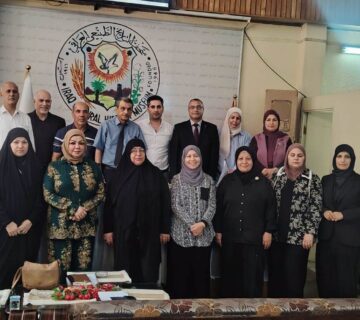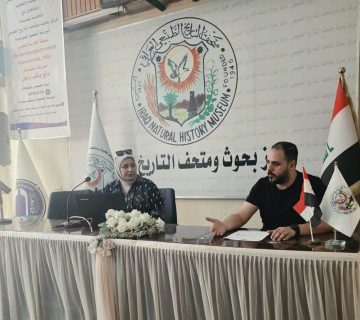
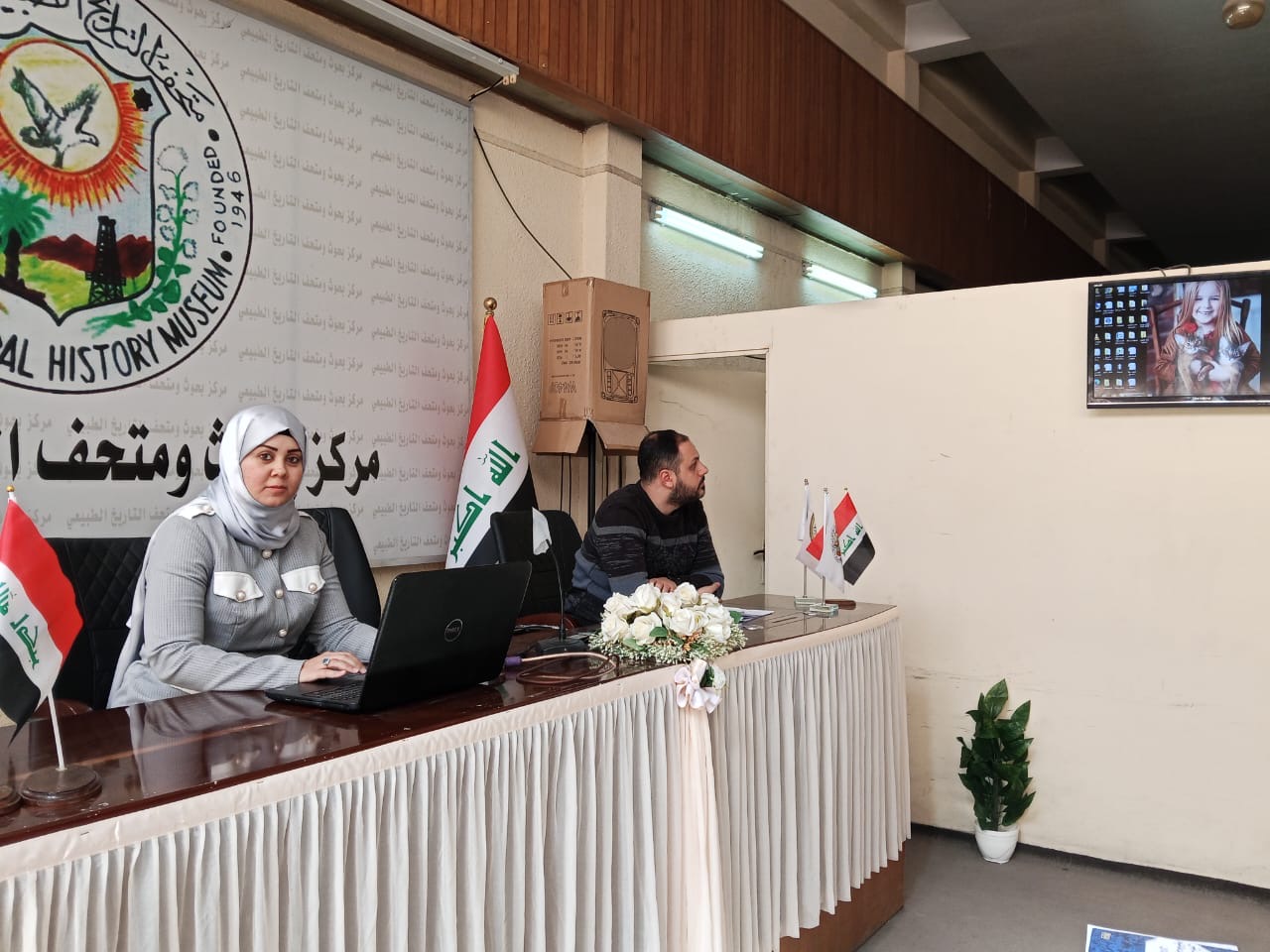
The Natural History Research and Museum Center at the University of Baghdad, with the support and guidance of the Center’s Director, Assistant Professor Dr. Hanaa Hani Al-Saffar, organized a workshop entitled “Chemical Communication Among Insects: The Language of Pheromones” on Monday, March 9, 2026. Assistant Lecturer Ali Kamel Wanas Al-Qaha and Assistant Lecturer Fatima Hussein facilitated the workshop.
This secret language opens new horizons for understanding nature and developing innovative environmental solutions in fields such as agriculture and public health. Pheromones are not merely chemical substances; they are a sophisticated and effective communication system at the heart of insect survival and adaptation.
The workshop aims to uncover the hidden secrets of the interconnected relationship between plants, insects, and bacteria. We seek to understand how an insect can transform from a harmless visitor to a flower into a rapid disease carrier through the chemical “language of pheromones” that governs its behavior. This lecture aims to explain how bacteria successfully “fake” these chemical signals to deceive insects and attract them to infected flowers. This opens our eyes to clever strategies for using these same scents and pheromones to protect crops and prevent the spread of plant diseases naturally and innovatively, avoiding the indiscriminate spraying of pesticides.
The most important recommendation that emerged from the workshop was to avoid using chemical (repellent) substances that mimic the warning pheromones of insects when spraying them on infested flowers. This would cause the insects to avoid landing on them. Instead, the workshop recommended developing “dual-target” traps: traps designed to contain sex pheromones to attract pests, and at the same time, biological control agents that the insects would carry and distribute to healthy trees to strengthen them against diseases. Finally, the workshop recommended that Pheromone control operations should be precisely timed to coincide with flowering periods and pollinator activity to ensure the protection of flowers’ natural barriers at the very time when they are most vulnerable to bacterial penetration. Research studying the chemical signature of bacteria should also be supported; if we know the precise compound that bacteria use to attract insects, we can develop odor repellents that neutralize their effects. This is the attraction.
And we wish all the faculty members of our center success and prosperity in serving the community, science, and knowledge.