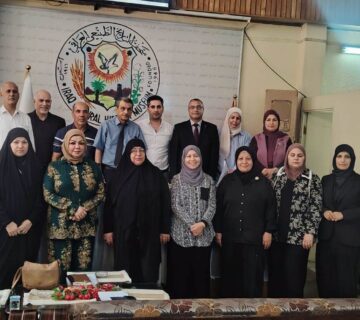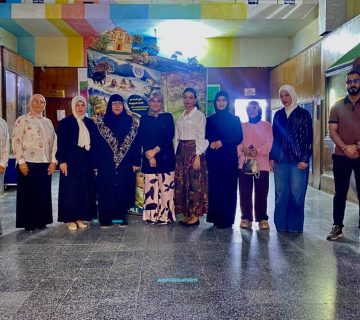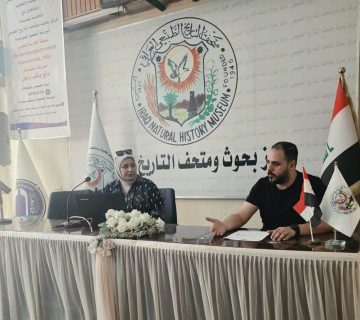

The Natural History Research Center and Museum, under the auspices of its Director, Assistant Professor Dr. Hanaa Hani Al-Saffar, organized a workshop entitled “Combating Harmful Snails” on Tuesday, May 5, 2026. The workshop was led by Senior Agricultural Engineer Inas Abdul Khalifa and presented by Assistant Lecturer Hiba Mohammed Jihad.
The workshop included an introduction to snails, which are mollusks found in humid environments, whether in agricultural soil or near water sources. Despite their natural role in decomposing organic matter and contributing to the nutrient cycle, some species become serious agricultural pests when they multiply excessively. Their danger lies in their ability to damage plants and crops, in addition to the role of some species in transmitting pathogens. The workshop aimed to introduce harmful snails in terms of their biological nature, types, and characteristics, and to clarify the extent of the damage they cause to crops and public health. It also analyzed the environmental and agricultural factors that contribute to snail proliferation and presented various control methods (agricultural, mechanical, biological, and chemical). During the workshop, the researcher recommended focusing on prevention, followed by a commitment to regular monitoring, optimal use of mechanical and biological methods, rational use of pesticides, and finally, the removal of weeds and agricultural waste.
The Sustainable Development Goals are: Quality Education (Goal 4) and Good Health and Well-being (Goal 3). We wish all faculty members at our center continued success in serving the community, science, and knowledge.