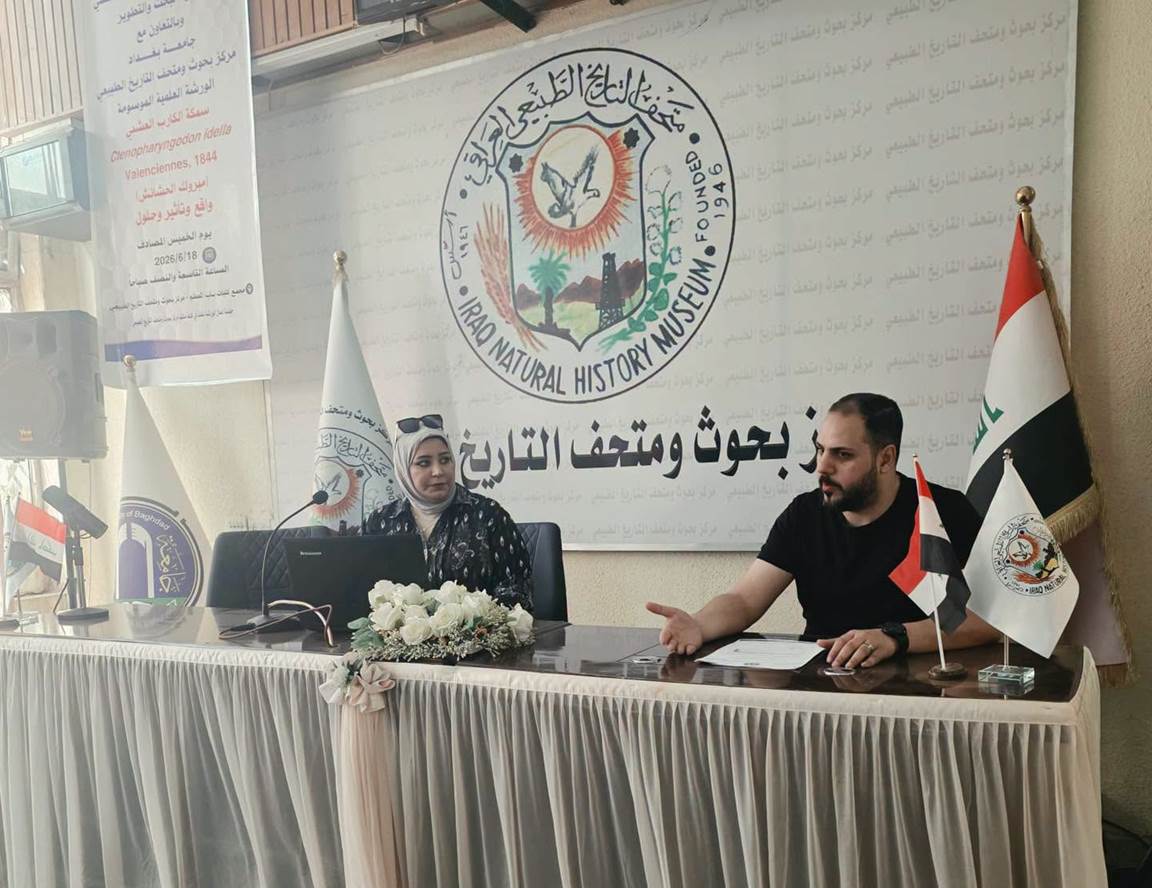
The Natural History Research and Museum Center at the University of Baghdad, with the support and guidance of the Center’s Director, Assistant Professor Dr. Hanaa Hani Al-Saffar, organized a workshop entitled “Physiological and Genetic Impact of Blood Parasites on Terrestrial and Aquatic Vertebrates in Iraq” on Tuesday, June 30, 2026. The workshop was facilitated by Assistant Lecturer Ali Kamel Wanas and presented by Assistant Lecturer Maryam Majid Abdul Ali.
Blood parasites are among the most important biological factors affecting the health of terrestrial and aquatic vertebrates. These parasites possess the ability to induce complex physiological and genetic changes, the effects of which can extend from the cellular level to the population and ecosystem levels. The workshop aimed to identify the most important blood parasites affecting terrestrial and aquatic vertebrates in Iraq, review the genetic effects of infection, and assess the role of modern molecular techniques in diagnosing blood parasites and revealing their genetic diversity. Finally, it reviewed the latest global trends in combating blood parasites.
The workshop’s key conclusion is that blood parasites are not merely pathogens, but rather influential environmental and evolutionary factors capable of reshaping host physiology and genetic architecture. This makes their study essential for understanding wildlife health and preserving biodiversity in Iraq.
This activity contributes to Sustainable Development Goals 4 (Quality Education), 3 (Good Health and Well-being), and 15 (Life on Land).
We wish all the faculty members of our center continued success in serving the community, science, and knowledge.


