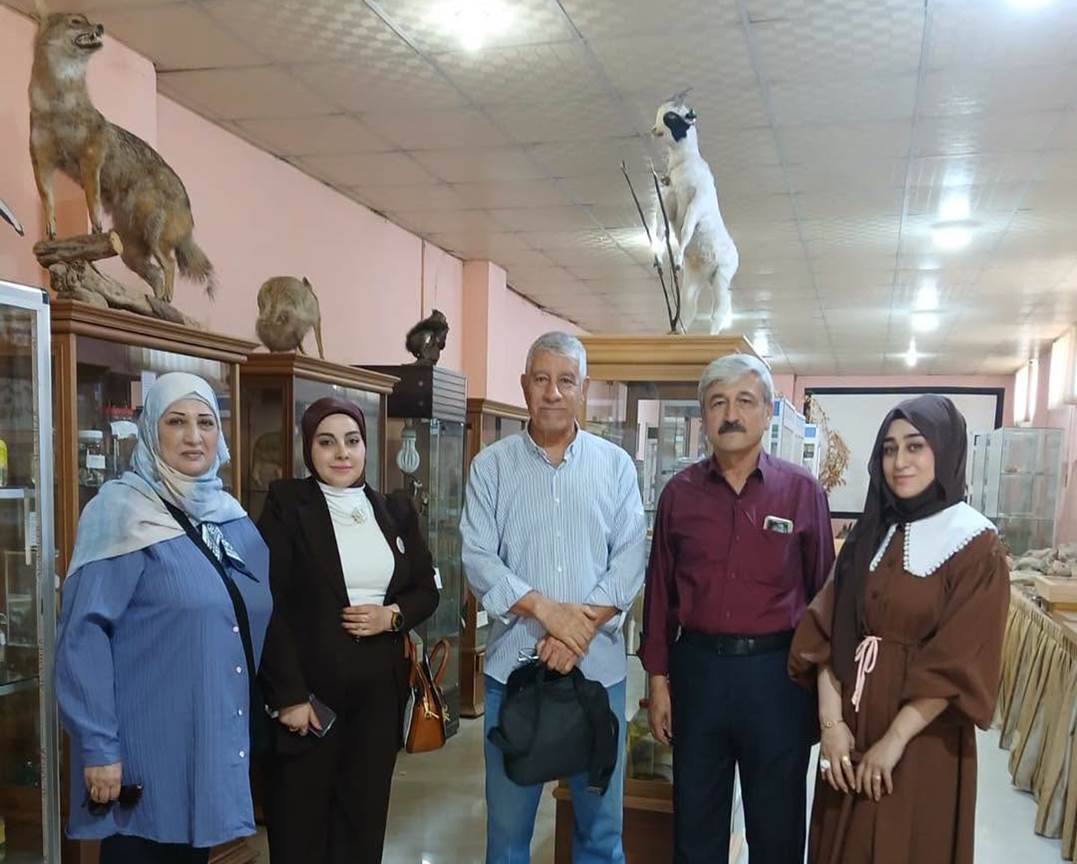
A delegation from the Natural History Research Center and Museum at the University of Baghdad, led by Professor Dr. Hanaa Hani Al-Saffar, visited Salahaddin University in Erbil to conduct field surveys. The delegation included Dr. Afkar Muslim Hadi, Head of the Vertebrate Department, and Ms. Yasmin Sarmad Hassan, Assistant Lecturer.
One of the main objectives of the visit was to tour the Natural History Museum and the Geology Department, view the exhibits, and conduct field surveys in areas such as Komspan, Lake Bastora, and surrounding regions. They also visited the zoo and recorded observations about Iraqi animals.
The delegation, consisting of Dr. Afkar Muslim Hadi and Ms. Yasmin Sarmad Hassan, was hosted by the Dean of the College of Science, Professor Dr. Abdul Karim Yassin Karim, and the Director of the Natural History Museum in the Department of Life Sciences, Dr. Sarbaz Ibrahim Mohammed Ali. They also visited the Geology Department, where they were hosted by the Head of the Department, Dr. Walid Suleiman. The observations recorded after conducting field surveys revealed some of the biodiversity of our beloved north, including vertebrates such as amphibians and birds, invertebrates such as various insect species, and the diversity of plant life.
The most important recommendation made by the researchers during the mission was to conduct further field surveys in different regions of Iraq and to foster cooperation between various natural history museums throughout the country to exchange information. This would facilitate the creation of a comprehensive database on the Iraqi environment. Additionally, they recommended studying invasive or introduced species and their impact on native habitats by recording observations and collecting samples. This would reduce confusion in scientific research when recording new species, new observations, or new records. Furthermore, they stressed the need to raise environmental awareness about the importance of preserving living organisms and their habitats, given their crucial role in the ecosystem. They also emphasized the importance of focusing on threatened species and finding well-considered methods to protect them from extinction. Finally, conducting important scientific research that contributes to solving environmental crises related to pollution, which plays a major role in destroying many habitats.
This activity achieves Sustainable Development Goal 4 (Quality Education) and Goal 17 (Partnerships for the Goals).


