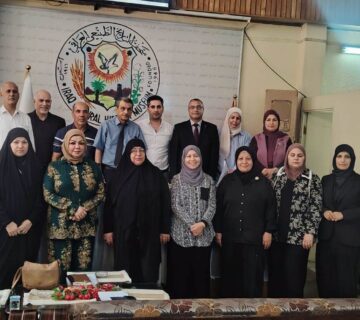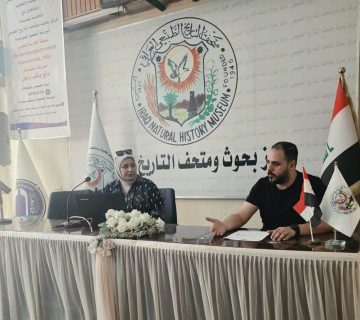
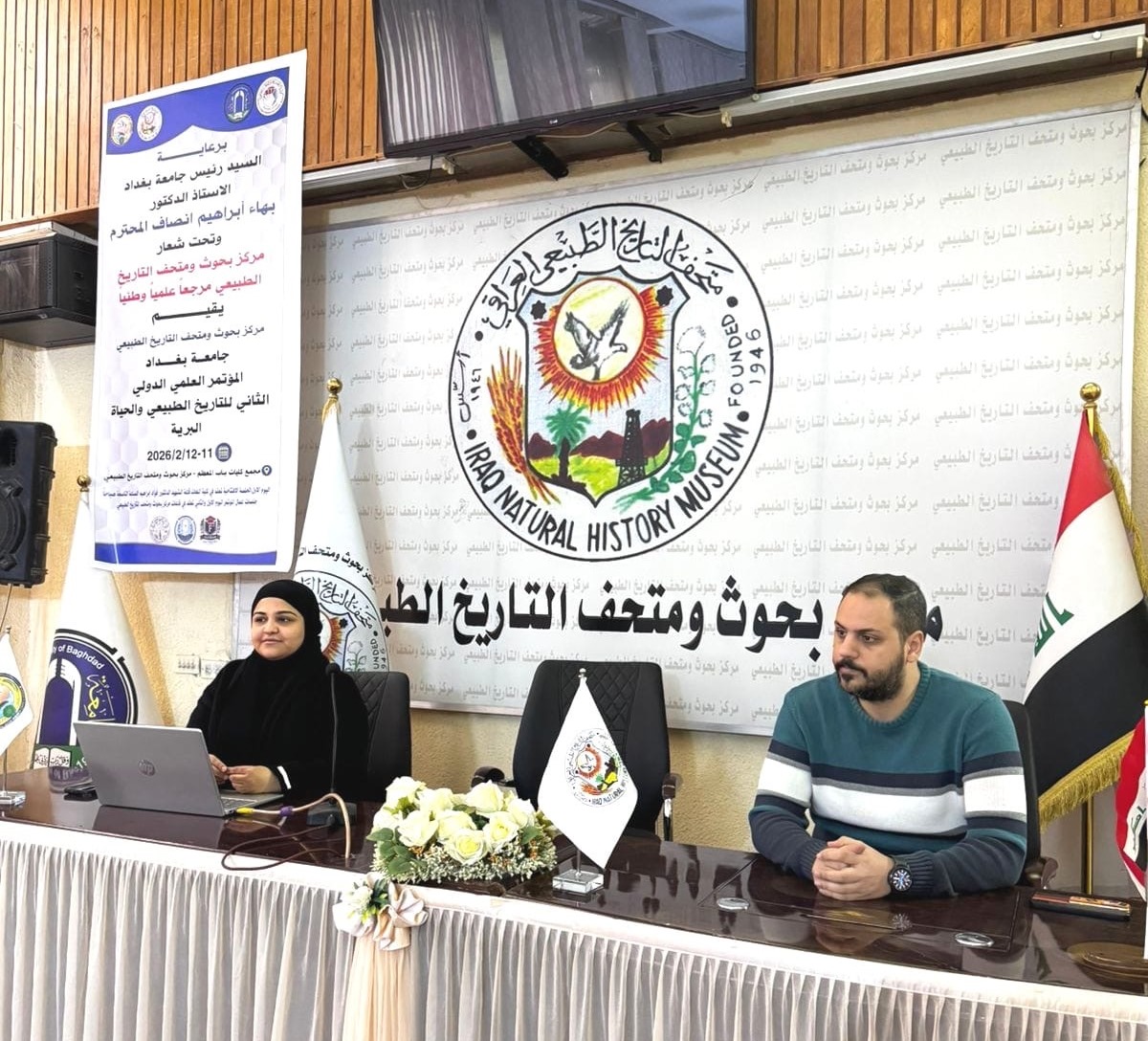
The Natural History Research Center and Museum at the University of Baghdad, with the support and guidance of its director, Assistant Professor Dr. Hanaa Hani Al-Saffar, organized a workshop entitled “Mycorrhizae: An Invisible Partnership Between Plants and Fungi” on Sunday, March 15, 2026. The workshop was facilitated by Assistant Lecturer Ali Kamel Wanas Al-Qahha and Assistant Lecturer Zainab Ghazi Sadiq, in collaboration with Assistant Professor Dr. Khansaa Rashid Majeed and Assistant Lecturer Sarah Jamal Jalil.
The workshop aimed to highlight the vital importance of mycorrhizal fungi in ecosystems and agriculture, explore the mechanisms of nutrient exchange (carbon for phosphorus) at the molecular level, review modern techniques for extracting, characterizing, and propagating mycorrhizal inoculants, foster interdisciplinary research collaboration (soil science, botany, and microbiology) to apply these technologies in the field, and discuss the role of mycorrhizae as a tool for addressing climate change and environmental stresses. The most important recommendations that emerged from the workshop included emphasizing the need to establish a national bank of local mycorrhizal strains adapted to harsh environmental conditions, integrating mycorrhizal applications into sustainable agriculture strategies and the shift towards biofertilizers, supporting research projects that study the microbial consortia between mycorrhizae and nitrogen-fixing bacteria, and finally, raising farmers’ awareness of the importance of reducing excessive tillage and the use of fungicides that destroy this vital soil network.
We wish all the faculty members of our center continued success in serving the community, science, and knowledge.